Opening remarks: Sara Beery, Massachusetts Institute of Technology
9:15
Invited talk 1: Beni Kellenberger, University College London
9:45
Invited talk 2: Harry Chao, Ohio State University
10:20
Cofee Break
10:40
Spotlight Sessions
11:30
Lunch & Posters
1:05
Invited talk 3: Ben Koger, University of Wyoming
1:40
Invited talk 4: Jonathan Sauder, École Polytechnique Fédérale de Lausanne
2:10
Panel discussion
3:10
Coffee Break
3:30
Invited talk 5: Justin Kitzes, University of Pittsburgh
4:00
Invited talk 6: Amanda Navine, University of Hawaii at Hilo
4:30
Invited talk 7: Subhransu Maji, University of Massachusetts Amherst
5:00
Closing Remarks: Sara Beery, Massachusetts Institute of Technology
Speakers
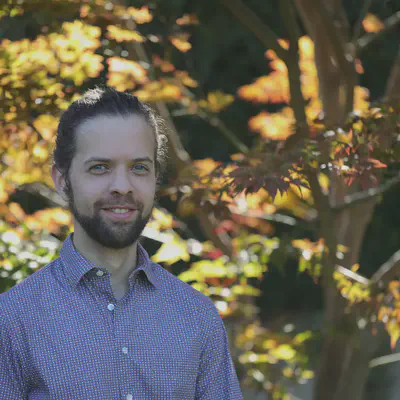
Beni Kellenberger
Ben is a Lecturer and permanent researcher in the People and Nature Lab at University College London (UCL), working at the intersection of Earth observation, machine learning, and ecology to answer questions about the distribution of species and underlying processes. Ben previously worked in the Jetz lab at Yale University, as well as the ECEO lab at EPFL, Switzerland, where he researched methods to automatically identify animals from above—using aerial imagery.
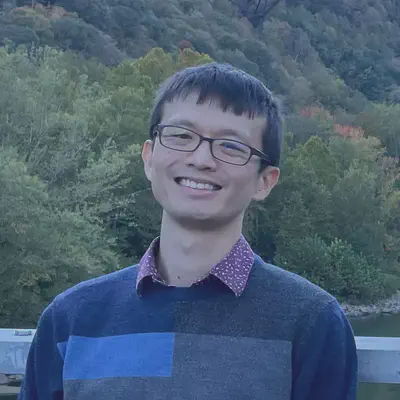
Harry Chao
Wei-Lun (Harry) Chao is an associate professor in Computer Science and Engineering at The Ohio State University (OSU). His research focuses on machine learning and computer vision, with applications spanning visual recognition, autonomous driving, biology, and healthcare. He is particularly interested in learning from imperfect data, including limited, noisy, heterogeneous, distribution-shifting, and inaccessible data. His contributions have been recognized by several awards and honors, including the OSU Early Career Distinguished Scholar Award (2025) and the CVPR Best Student Paper Award (2024). Before joining OSU in 2019, he was a postdoctoral associate at Cornell University (2018–2019), working with Kilian Weinberger and Mark Campbell. He earned his Ph.D. in Computer Science from the University of Southern California (2013–2018) under the supervision of Fei Sha.
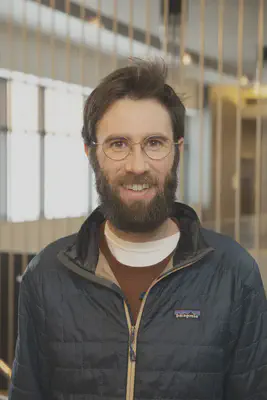
Ben Koger
Ben is an assistant professor at the University of Wyoming in the School of Computing and the Department of Zoology and Physiology. The focus of his work is designing and using computer vision tools to study ecological systems. He combines imagery from drones, fixed wing aircraft and ground-based cameras with deep learning driven software to detect and count individuals while quantifying their social and physical landscapes to understand animal populations and drivers of animal movement. Current and previous projects include using drones to study social dynamics of African ungulates and migrating sockeye salmon and landscape-scale aerial monitoring of pronghorn in collaboration with the Wyoming Game and Fish Department.
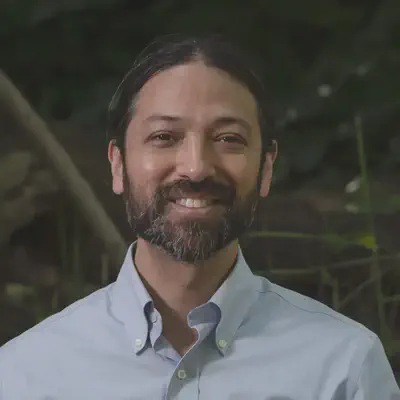
Jonathan Sauder
Jonathan Sauder is a PhD student at the École Polytechnique Fédérale de Lausanne (EPFL), Switzerland, working on the intersection of 3D computer vision, machine learning, and coral reefs. Supervised by Devis Tuia (ECEO lab) and Anders Meibom (LGB lab), Jonathan’s thesis is embedded in EPFL’s Transnational Red Sea Center (TRSC), exploring how recent breakthroughs in machine learning and computer vision can be used to create the next generation of coral monitoring tools. Jonathan obtained his Master’s in computer science from TU Berlin and his Bachelor’s from the Hasso Plattner Institute in Potsdam, where his research focused on machine learning, compressed sensing, and computer vision.
Justin Kitzes
Justin Kitzes is an Associate Professor of Biological Sciences at the University of Pittsburgh, where he leads a research group focused on the development and application of automated acoustic survey methods in ecology and conservation. His work focuses specifically on the discovery of rare and hard-to-detect species, the use of machine learning models for species-level and within-species sound classification, and the creation of open-source tools and documentation to enable more widespread use of bioacoustics methods. Dr. Kitzes holds a Ph.D. in Environmental Science, Policy, and Management from the University of California, Berkeley.
Amanda Navine
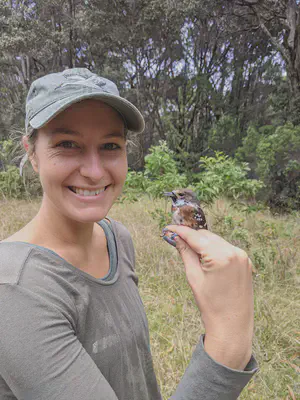
Amanda has studied the endangered native birds of Hawai’i since she arrived on Big Island to complete her master’s degree in the Tropical Conservation Biology and Environmental Science Program at the University of Hawai’i at Hilo in 2019. Her research since graduating in 2021 has been working on using machine learning to advance passive acoustic monitoring of bird populations and improve management. She has collaborated with groups like Google DeepMind and Cornell Lab of Ornithology to improve the way we make ecological inference from machine learning classifier output.
Subhransu Maji
I am a Professor in the Manning College of Information and Computer Sciences at the University of Massachusetts Amherst, where I also serve as Co-Director of the Computer Vision Laboratory. I received my Ph.D. in Computer Science from the University of California, Berkeley, and a B.Tech. in Computer Science and Engineering from IIT Kanpur. Prior to joining UMass Amherst, I was a Research Assistant Professor at TTI-Chicago. My research focuses on developing visual recognition algorithms capable of perceiving fine-grained details and learning effectively from limited data. I am also interested in AI applications that serve societal needs and advance scientific discovery, particularly in ecology and remote sensing. In the past, I have had the opportunity to work with several academic and industrial research organizations, including TTI-Chicago, the University of Amsterdam, AWS AI, Google, INRIA, Microsoft Research, the CLSP Center at Johns Hopkins University, and the University of Oxford. My research has been supported by the National Science Foundation—including a CAREER Award—as well as NASA, Climate Change AI, Facebook, NVIDIA, Dolby, and Adobe. My work has received several distinctions, including the Best Paper Award at AAAI 2024 (AI for Social Impact Track), a Best Paper Honorable Mention at CVPR 2018, and a Best Paper Award at WACV 2015.
Expert panel
The hybrid panel discussion, “When Domains Collide: Ecology and Computer Vision in Practice,” will bring together experts in person and remotely to address the challenges and opportunities in applying computer vision to real-world ecology and conservation efforts. The discussion will focus on the practical use of this technology in the field.
The panelists are: Serge Belongie, Tanya Berger-Wolf, Joost Daniels, Justin Kitzes and Ryan Perroy